



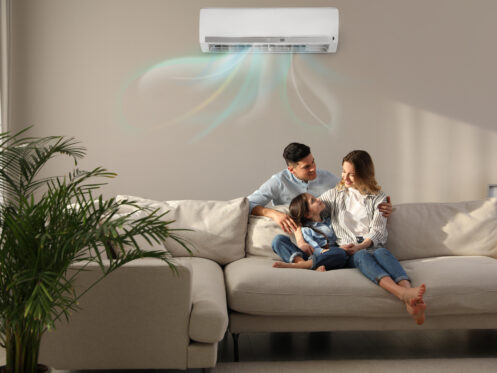
For homeowners in Tolleson, AZ, and across the West Valley, keeping the entire home comfortable during intense summers is a priority. But what about those spaces that don’t connect to your central air system? Garages, workshops, home additions, and converted living areas can become unbearably hot, limiting their use when temperatures soar. Extending your existing ductwork isn’t always practical or cost-effective, either.
Luckily, there is a highly efficient and flexible solution: ductless mini-splits. These systems provide powerful, targeted heating and cooling for individual spaces without complex, expensive ductwork modifications. This makes them an ideal choice for bringing year-round comfort to the challenging-to-cool areas of Tolleson homes.
What Is a Ductless Mini-Split and How Does It Work?
A ductless mini-split cools a room without traditional air ducts. It has two main components: an outdoor condenser unit and one or more indoor air-handlers. These connect by a small conduit that houses the power cable, refrigerant tubing, and a condensate drain line. This conduit requires only a 3-inch hole through an exterior wall, making installation much less invasive than other options.
The outdoor unit compresses and circulates refrigerant to the air handler inside, which then absorbs heat from the indoor air. A fan inside the air handler blows the newly cooled air directly into the room. This process is highly efficient because it delivers comfort right where you need it, avoiding potential energy loss as air travels through a long network of ducts.
This approach is fundamentally different from expanding your home’s central AC system. Extending ductwork requires tapping into your existing infrastructure. This is a major construction project that may not be feasible depending on your home’s layout and the capacity of your current HVAC equipment.
Why Are Mini-Splits a Good Choice for Garages and Home Additions?
Ductless mini-splits are particularly well-suited for spaces that were not part of the home’s original HVAC footprint. Their design offers several key advantages for garages, additions, and converted rooms without supply or return ducts.
One of the primary benefits is independent temperature control. You can set the temperature for the new space without affecting the rest of your home, creating a customized comfort zone. This enhances efficiency because you run the system only when the room is in use. Additionally, the installation process is faster and far less disruptive than a major ductwork extension, avoiding the mess and expense of cutting into walls and ceilings.
Garages and Workshops
Many West Valley homeowners use their garages for more than just parking cars. Whether it’s a workshop for hobbies, a home gym, or a project area, the summer heat can make it an uncomfortable place to spend time. A ductless mini-split can transform your garage into a functional, comfortable space year-round. When considering a garage system, a professional assessment is crucial.
- Quality of the insulation
- Size of the room
- Sun exposure
- Type of garage door
- Heat-generating equipment like tools or a spare refrigerator
Room Additions and Converted Living Spaces
Mini-splits are also an excellent solution for room additions, enclosed patios, bonus rooms, and other converted living spaces. From a new guest room to a home office occupying an attic, these systems can provide dedicated air conditioning without putting extra strain on your main unit.
A home’s central HVAC system is typically sized to cool the original square footage. Asking it to handle an additional room can reduce its performance, lead to uneven temperatures throughout the house, and potentially shorten its lifespan. A mini-split conditions the new space independently, preserving the integrity and efficiency of your existing system.
Mini-Split vs. Extending Ductwork: Which Option Makes More Sense?
While ductless systems are a great choice in many situations, they aren’t the only option. In some cases, extending your existing ductwork might be a viable alternative. The right decision depends on several factors specific to your home and project.
Consider the accessibility of your current ductwork. If supply and return ducts are already located near the new space, an extension might be relatively straightforward. You also need to assess the capacity of your existing central AC system.
If it has enough power to handle the extra load, extending ducts could be a sensible choice. However, if your system is already working at its limit, a mini-split is likely the more practical solution. Ultimately, the choice often comes down to installation complexity and intended room use. If adding ducts would require substantial demolition and reconstruction, a mini-split is almost always more practical. If you want separate temperature control for the new space, a mini-split is the clear winner.
How Energy Efficient Are Ductless Mini-Splits in Arizona?
During our long and demanding cooling season in Tolleson, energy efficiency is a major concern for homeowners. Ductless mini-splits excel in this area for several reasons. First, their zoned operation means you aren’t paying to cool a garage or workshop 24/7. You can simply turn it on when you need it.
Many modern mini-splits feature high-efficiency ratings and variable-speed inverter technology. The latter allows the compressor to adjust its speed automatically to match the cooling demand precisely rather than cycling on and off at full power. This results in more consistent temperatures and lower energy consumption.
Also, because there are no ducts, there is no energy loss from air leaks, which can be a significant source of waste in central systems. This ductless efficiency is a major advantage in a climate where air conditioners run for many months each year.
What Should You Consider Before Installing a Mini-Split?
To ensure your new ductless system provides optimal comfort and efficiency, proper system selection and professional AC installation are essential. An experienced technician will evaluate several factors before recommending specific equipment.
- Room size and ceiling height
- Wall and ceiling insulation quality
- Window quantity, type, and sun exposure
- Occupancy and intended use of the space
- Electrical circuit capacity
- Indoor and outdoor unit placement
Proper Mini-Split Sizing Matters
One of the most critical factors is mini-split sizing. It’s a common misconception that simply matching a system’s cooling capacity (measured in BTUs) to the room’s square footage is sufficient. A true professional evaluation involves a detailed cooling load calculation that accounts for all the variables mentioned above.
An undersized unit will struggle to keep the room cool on the hottest Arizona days, running constantly and suffering premature wear and tear. An oversized unit will cool the space too quickly and shut off before it can properly dehumidify the air, leaving the room feeling cold and clammy. Proper sizing is the key to achieving both comfort and efficiency.
Can a Mini-Split Keep a Garage Cool During a West Valley Summer?
Yes, a correctly sized and properly installed mini-split can keep a garage comfortable, even at the peak of a West Valley summer. However, the system’s performance relates directly to the condition of the garage itself. An uninsulated metal box baking in the sun will be a challenge for any cooling system.
To get the best results, it’s important to limit unnecessary heat gain. You can do this by improving insulation in the walls and ceiling, adding weather sealing around doors and windows, and, most importantly, installing an insulated garage door. These steps create a more manageable environment for the mini-split to cool effectively and efficiently.
Find the Right Cooling Solution for Your Tolleson, AZ, Home With El Indio AC
When extending ductwork is impractical, or you need a dedicated comfort solution, a ductless mini-split can be the answer for your garage, workshop, or home addition. This system offers an efficient, flexible, and powerful way to make every part of your home usable and comfortable, no matter how hot it gets outside.
The right choice ultimately depends on your home’s unique layout, your existing HVAC system, and the specific characteristics of the space you want to cool. A professional assessment is the best way to explore your options and find the most effective and economical solution.
If you are looking for the best way to cool your garage or new addition, contact El Indio AC today for a complete evaluation of your home’s air conditioning needs in Tolleson or nearby.